
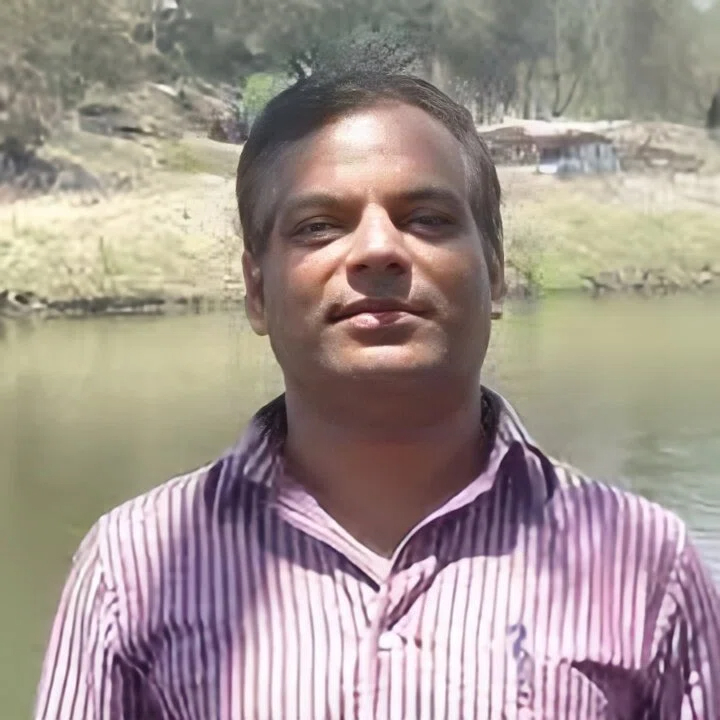
 Prof. Rajkumar Buyya (IEEE
Fellow, ACM Fellow)
Prof. Rajkumar Buyya (IEEE
Fellow, ACM Fellow)
The University of Melbourne, Australia
Bio: Dr.
Rajkumar Buyya is a Redmond Barry
Distinguished Professor and Director of the
Quantum Cloud Computing and Distributed
Systems (qCLOUDS) Laboratory at the
University of Melbourne, Australia. He is
also serving as the founding CEO of
Manjrasoft, a spin-off company of the
University, commercializing its innovations
in Cloud Computing. He has authored over 850
publications and seven textbooks including
"Mastering Cloud Computing" published by
McGraw Hill, China Machine Press, and Morgan
Kaufmann for Indian, Chinese and
international markets respectively. Dr.
Buyya is one of the highly cited authors in
computer science and software engineering
worldwide (h-index=178, g-index=394,
i10-index=854, and 168,400+ citations). A
bibliometric study by Stanford University
and Elsevier since 2019, Dr. Buyya is
recognized as the Highest-Cited author in
the Distributed Computing field worldwide.
He graduated 60+ PhD students who are
working in world-leading research
universities and high-tech companies such as
Microsoft, Google, and IBM. He has been
recognised as an ACM Fellow, IEEE Fellow, a
"Web of Science Highly Cited Researcher" for
seven times since 2016, the "Best of the
World" twice for research fields (in
Computing Systems in 2019/2024 and Software
Systems in 2021/2022/2023) as well as
"Lifetime Achiever" and "Superstar of
Research" in "Engineering and Computer
Science" discipline twice (2019 and 2021) by
the Australian Research Review.
Software technologies for Grid, Cloud, Fog,
Quantum computing developed under Dr.Buyya's
leadership have gained rapid acceptance and
are in use at several academic institutions
and commercial enterprises in 60+ countries
around the world. Manjrasoft's Aneka Cloud
technology developed under his leadership
has received "Frost New Product Innovation
Award". He served as founding
Editor-in-Chief of the IEEE Transactions on
Cloud Computing. He is currently serving as
Editor-in-Chief of Software: Practice and
Experience, a long-standing journal in the
field established in 1970. He has presented
over 750 invited talks (keynotes, tutorials,
and seminars) on his vision on IT Futures,
Advanced Computing technologies, and
Spiritual Science at international
conferences and institutions in Asia,
Australia, Europe, North America, and South
America. He has recently been recognized as
a Fellow of the Academy of Europe. For
further information on Dr.Buyya, please
visit his cyberhome:
www.buyya.com
Speech Title: Neoteric Frontiers in Cloud
and Quantum Computing
Abstract: The twenty-first-century
digital infrastructure and applications are
driven by Cloud computing, Internet of
Things (IoT), Artificial Intelligence (AI),
and Quantum computing paradigms. The Cloud
computing paradigm has been transforming
computing into the 5th utility wherein
"computing utilities" are commoditized and
delivered to consumers like traditional
utilities such as water, electricity, gas,
and telephony. It offers infrastructure,
platform, and software as services, which
are made available to consumers as
subscription-oriented services on a
pay-as-you-go basis over the Internet. Its
use is growing exponentially with the
continued development of new classes of
applications such as AI-powered models
(e.g., ChatGPT) and the mining of crypto
currencies such as Bitcoins. To make Clouds
pervasive, Cloud application platforms need
to offer (1) APIs and tools for rapid
creation of scalable and elastic
applications and (2) a runtime system for
deployment of applications on geographically
distributed Data Centre infrastructures
(with Quantum computing nodes) in a seamless
manner.
This keynote presentation will cover (a)
21st century vision of computing and
identifies various emerging IT paradigms
that make it easy to realize the vision of
computing utilities; (b) innovative
architecture for creating elastic Clouds
integrating edge resources and managed
Clouds, (c) Aneka 6G, a 6th generation Cloud
Application Platform, for rapid development
of Big Data/AI applications and their
deployment on private/public Clouds driven
by user requirements, (d) experimental
results on deploying Big Data/IoT
applications in engineering, health care
(e.g., COVID-19), deep learning/Artificial
intelligence (AI), satellite image
processing, and natural language processing
(mining COVID-19 literature for new
insights) on elastic Clouds, (e) QFaaS: A
Serverless Function-as-a-Service Framework
for Quantum Computing; and iQuantum
Simulation Toolkit, and (f) new directions
for emerging research in Cloud and Quantum
computing.
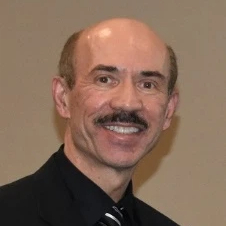 Prof. Shahram Latifi (IEEE Fellow, AAIS Fellow)
University of Nevada, USA
Bio: Shahram Latifi, received the Master of Science and the PhD degrees both in Electrical and Computer Engineering from Louisiana State University, Baton Rouge, in 1986 and 1989, respectively. He is currently a Professor of Electrical Engineering at the University of Nevada, Las Vegas. Dr. Latifi is the co-director of the Center for Information Technology and Algorithms (CITA) at UNLV. He has designed and taught undergraduate and graduate courses in the broad spectrum of Computer Science and Engineering in the past four decades. An internationally recognized researcher and speaker, Dr. Latifi has delivered keynote talks and seminars on AI, Machine Learning, and emerging technologies worldwide. He has authored over 400 technical articles in the areas of networking, AI/ML, cybersecurity, image processing, biometrics, fault tolerant computing, parallel processing, and data compression. His research has been funded by NSF, NASA, DOE, DoD, Boeing, and Lockheed. Dr. Latifi was an Associate Editor of the IEEE Transactions on Computers (1999-2006), an IEEE Distinguished Speaker (1997-2000), Co-founder and Chair of the IEEE Int'l Conf. on Information Technology (2000-2004) and founder and Chair of the International Conf. on Information Technology-New Generations (2005-Present) . Dr. Latifi is the recipient of several research awards, the most recent being the Barrick Distinguished Research Award (2021). Dr. Latifi was recognized to be among the top 2% researchers around the world in December 2020, according to Stanford top 2% list (publication data in Scopus, Mendeley). He is an IEEE Fellow (2002), an AAIS Fellow (2025) and a Registered Professional Engineer in the State of Nevada.
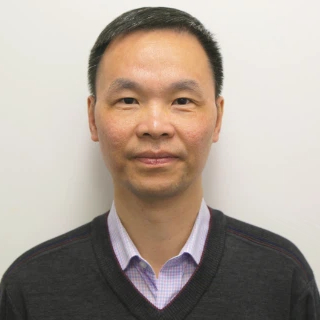 Prof. Huiyu Zhou
University of Leicester, UK
Bio: Dr.
Huiyu Zhou received a Bachelor of
Engineering degree in Radio Technology from
Huazhong University of Science and
Technology of China, and a Master of Science
degree in Biomedical Engineering from
University of Dundee of United Kingdom,
respectively. He was awarded a Doctor of
Philosophy degree in Computer Vision from
Heriot-Watt University, Edinburgh, United
Kingdom. Dr. Zhou currently is a full
Professor at School of Computing and
Mathematical Sciences, University of
Leicester, United Kingdom. He has published
over 600 peer-reviewed papers in the field.
His research work has been or is being
supported by UK EPSRC, ESRC, AHRC, MRC, EU,
Innovate UK, Royal Society, British Heart
Foundation, Leverhulme Trust, Puffin Trust,
Alzheimer’s Research UK, Invest NI and
industry. Homepage:
https://le.ac.uk/people/huiyu-zhou
Speech Title: Title: Image Completion
with Context-Adaptive Diffusion
Abstract: Image completion is a
challenging task, particularly when ensuring
that generated content seamlessly integrates
with existing parts of an image. While
recent diffusion models have shown promise,
they often struggle with maintaining
coherence between known and unknown
(missing) regions. This issue arises from
the lack of explicit spatial and semantic
alignment during the diffusion process,
resulting in content that does not smoothly
integrate with the original image.
Additionally, diffusion models typically
rely on global learned distributions rather
than localized features, leading to
inconsistencies between the generated and
existing image parts. In this work, we
propose ConFill, a novel framework that
introduces a Context-Adaptive Discrepancy
(CAD) model to ensure that intermediate
distributions of known and unknown regions
are closely aligned throughout the diffusion
process. By incorporating CAD, our model
progressively reduces discrepancies between
generated and original images at each
diffusion step, leading to contextually
aligned completion. Moreover, ConFill uses a
new Dynamic Sampling mechanism that
adaptively increases the sampling rate in
regions with high reconstruction complexity.
This approach enables precise adjustments,
enhancing detail and integration in restored
areas. Extensive experiments demonstrate
that ConFill outperforms current methods,
setting a new benchmark in image completion.